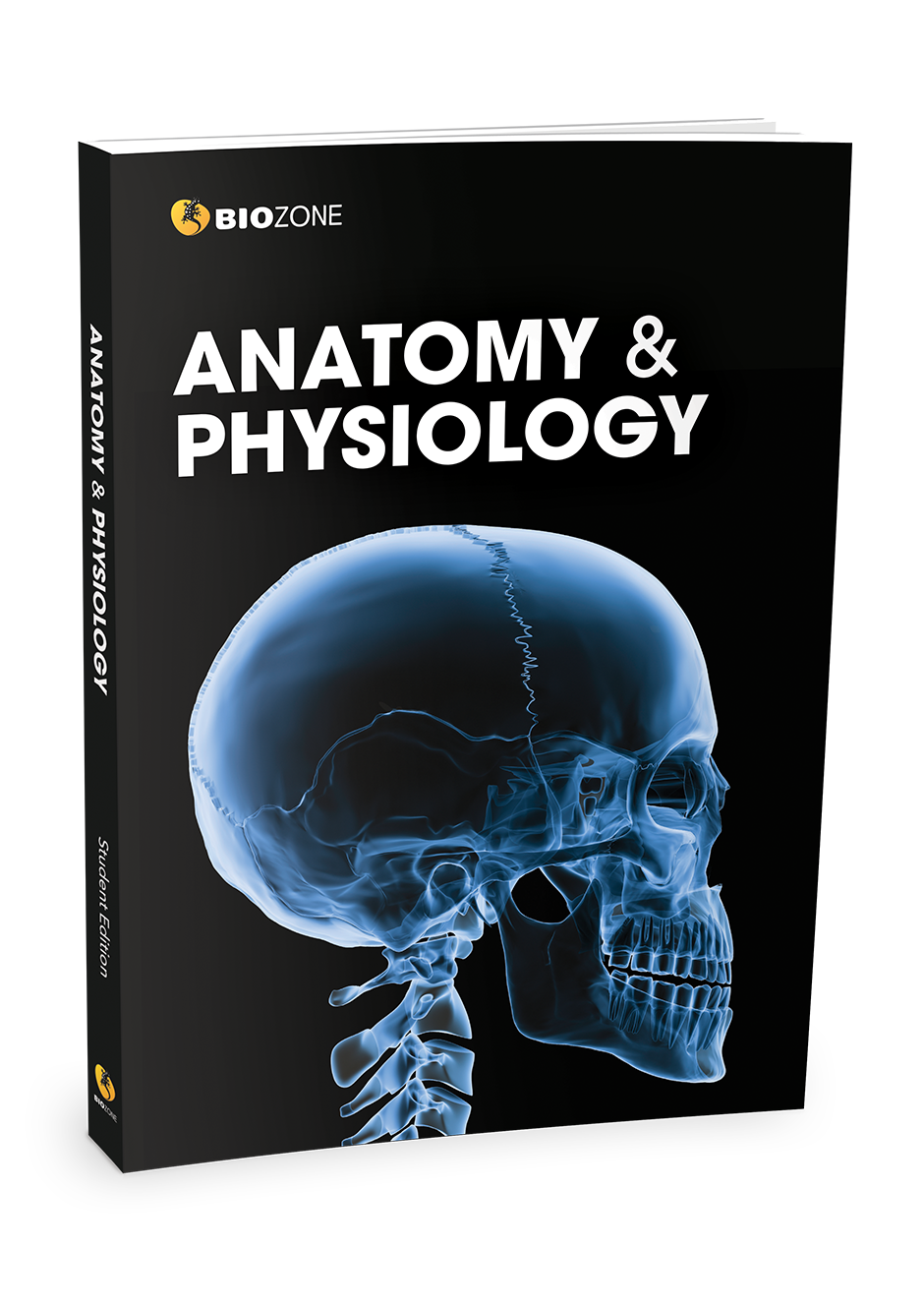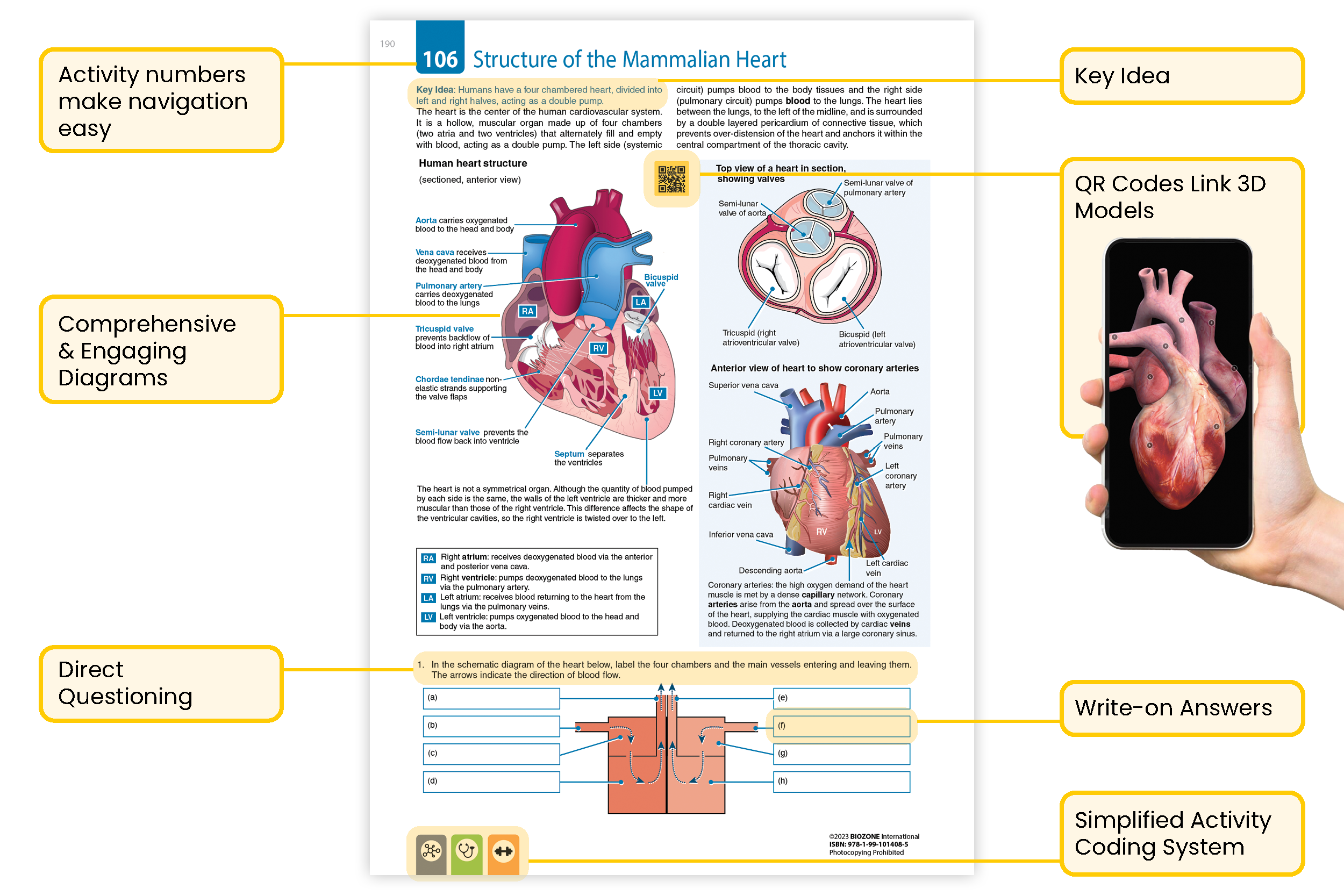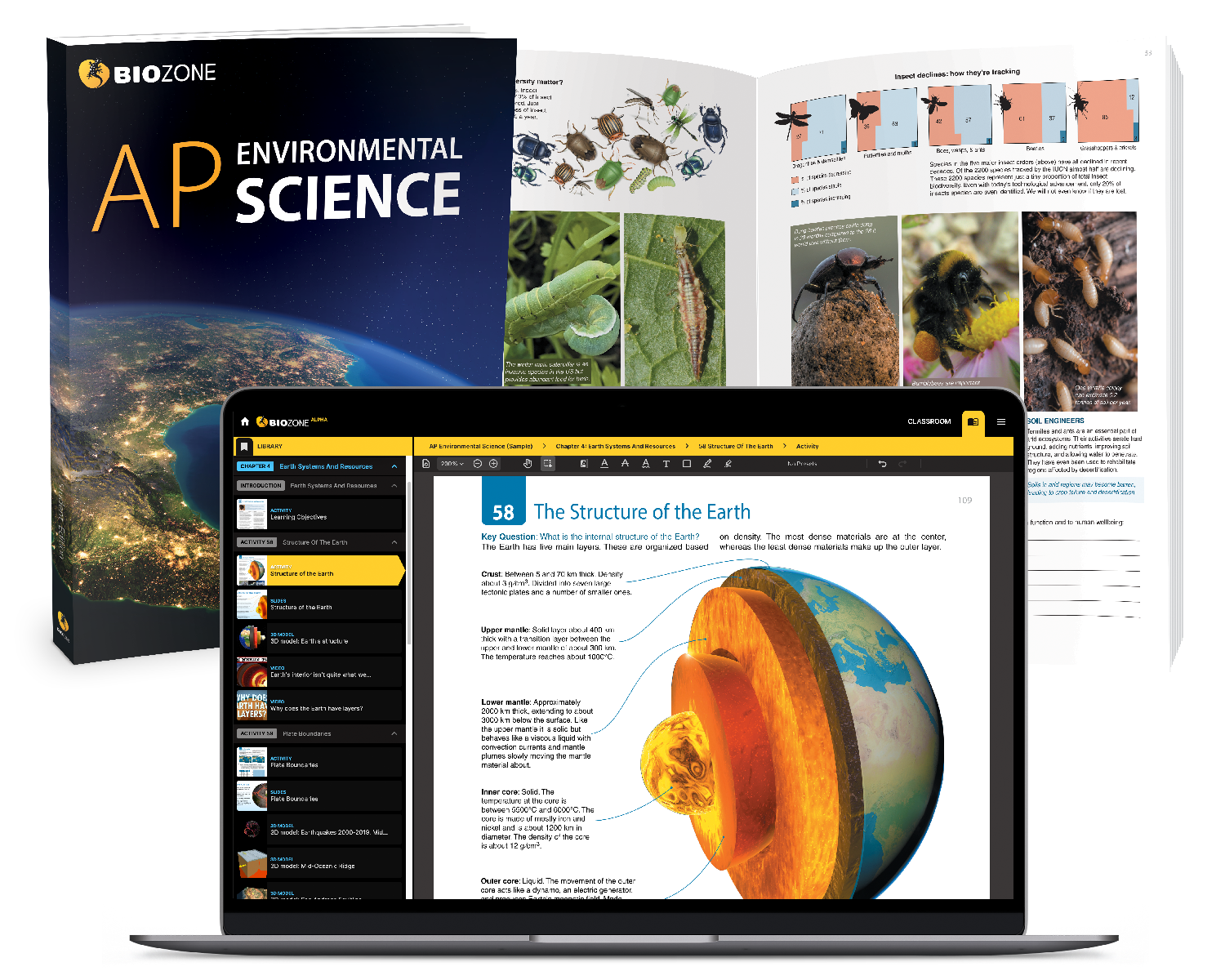
A 232 page modular workbook combining 3D models and traditional artwork to explore the 11 body systems.
Suitability: Any course concerned with anatomy and physiology, human biology, medical or health training. For students from high school to tertiary level.
BIOZONE is not responsible for the content of external internet sites. Please note that listing any
other company's products on this website does not, in any way, denote BIOZONE's endorsement of them.
Maintained by Gary Richardson from the Eastern Kentucky University. Lecture notes include: muscle, nervous, cardiovascular, respiratory systems, and blood & body defences.
The National Library of Medicine is creating a digital atlas of the human body. This project, called the Visible Human, has already produced magnetic resonance imaging and physical cross-sections of a human male cadaver.
The Visible Human Project is creating complete, anatomically detailed, 3D representations of the male and female human body using transverse CT, MRI and cryosection images of representative male and female cadavers at 1mm intervals.
An excellent interactive, multiple choice study tool designed for students who want to learn anatomy. You see a part of the human body labeled with numbers, choose the correct answer from a list and your answers are checked immediately.
Breastmilk is a complex fluid, rich in nutrients and in non-nutritional bioactive components. Knowledge of the composition of human milk and the factors that influence it has increased considerably over the past two decades. This web page briefly summarizes current understanding
One of 10 types of systems on the site, this diagram shows parts of the digestive system, and clicking on the small buttons will provide more information on the chosen part.
An introduction to the human digestive system. Then take a closer look at the structure and function of the stomach, liver, pancreas and intestines. Also covers the digestive physiology in different species.
Part of NIDDK website, a brief introduction to the digestive system: how food is digested, absorption and transport of nutrients, hormone regulators, and nerve regulators.
With use of photos this site looks at what muscles are and the various types, how they function, movement, mechanics of muscles. Sacomere structure, muscle contraction and reflexes, fibre types, motor unit recruitment
Part of the Nutrition and Health Online magazine. This is a brief introduction to the different energy systems types involved in the body's production of energy.
Part of the GKT computer aided learning website, this page contains information and diagrams on muscle spindle structure, fibre response, stretch reflexes and more.
Part of Jim Kimball's extensive website, this section looks at structure and function of smooth muscle, cardiac muscle, the sliding-filament model, muscle diseases plus more.
There are eight sections that represent different areas of the human body, use your mouse to go to a gallery of image thumbnails and text describing each area with larger images. Each image is presented in two forms, labeled and unlabeled, which can be used for instruction and assessment.
Knowledge of the structure and function of bones and aspects of skeletal system generally are essential parts of training in many therapies, such as Massage, Aromatherapy, Acupuncture, Shiatsu, and others. This page is intended to include the detail required for most Basic / First Level Courses in these therapies, and some ITEC Diplomas.
Comprehensive, readable and well illustrated site aimed well for its target student audience. Focuses on sex hormones, inslin, GH, adrenaline, and ADH and includes quizzes to test understanding.
Comprehensive coverage of the nature of hormones, receptors, and control systems, the mechanisms of hormone action, and the structural and functional organization of the endocrine system.
..The inner surface of the thoracic cavity and the outer surface of the lungs are lined with pleural membranes which adhere to each other. If air is introduced between them, the adhesion is broken and the natural elasticity of the lung causes it to collapse. This can occur from trauma. And it is sometimes induced deliberately to allow the lung to rest. In either case, reinflation occurs as the air is gradually absorbed by the tissues...
Primary function is to obtain oxygen for use by body's cells & eliminate carbon dioxide that cells produce. Includes respiratory airways leading into (& out of) lungs plus the lungs themselves. Pathway of air: nasal cavities (or oral cavity) > pharynx > trachea > primary bronchi (right & left) > secondary bronchi > tertiary bronchi > bronchioles > alveoli (site of gas exchange)
A directory site that directs the user to web sites investigating aspects of heart physiology: heart diseases and disorders, strokes, heart surgery, high blood pressure, diet, exercise, and their effects on the cardiovascular system.
Part of the 'Health Square' website, this article gives excellent broad coverage of Heart Disease. Consisting of several pages and titled with headings such as 'What can go wrong' and 'How to stave off Disease', it provides an excellent introduction to the topic
This site looks at how the heart works, how blood flows through the heart, has a photo gallery of diseased hearts, and learn about the pioneers of heart surgery.
Take a tour of the heart and discover the complexities of its development and structure. Follow the blood through the blood vessels and learn how to have a healthy heart.
Examines the history behind the blood group of humans. Looks at the Rhesus system and RH incompatibility. Listed below are blood services which includes facts and figures for each of the countries listed.
Part of Todar's Online Textbook of Bacteriology, this article provides a significant amount of information on Inducible defenses, Antibody-mediated Immunity and Cell-mediated Immunity.
The Biology Project site allows the browser to learn about a topic of interest using a question and answer format, with very useful tutorials. Contains additional activities and links to other sites.
Monoclonal antibodies (MAbs for short) are an essential part of a molecular biologist's toolkit. But what exactly are these molecules? How and why are they used so extensively in molecular biology? The purpose of this web page is to answer these questions as best it can, and to direct you to further resources on the subject should you wish to research the topic more thoroughly.
Humans (and mice) have the ability to make antibodies able to recognize (by binding to) virtually any antigenic determinant (epitope) and to discriminate between even similar epitopes. Not only does this provide the basis for protection against disease organisms, but it makes antibodies attractive candidates to target other types of molecules found in the body
In 1975, Kohler and Milstein first fused lymphocytes to produce a cell line which was both immortal and a producer of specific antibodies. The two scientists were awarded the Nobel Prize for Medicine in 1984 for the development of this "hybridoma." The value of hybridomas to the field was not truly appreciated until about 1987, when MAbs were regularly produced in rodents for diagnostics
Part of Todar's Online Textbook of Bacteriology, this article provides a significant amount of information on Constitutive defenses, including Anitomical Defenses, Microbial Antagonism, Antimicrobial Substances in Host Tissues and more.
Contains a collection of tutorials on basic neural functions, including the structure of the brain, and action potentials. Checks your answers as you progress through the tutorial.
The NIDA website provides information on drug abuse and their effects on the human body. Includes LSD, inhalants, heroin, marijuana, ecstasy, nicotine, steroids, and
more.
Created for students and teachers wanting to learn more about the nervous system. Experiments and activities, and teaching resources are available. Also has a section on the effects of drug abuse on the nervous system.
Learn all about our brains at different stages of our lives , from a baby's brain to an ageing brain. Also contains a 3D anatomy, illusions of the brain, scanning the brain and more.
Learn with the use of diagrams the many parts that make up the ear, the peripheral hearing mechanism, central auditory mechanism as well as disorders associated with the ear.
This site discusses the description, causes, diagnosis and treatment of asthma and other respiratory disorders. Well worth a look for a full coverage of this topic.
Part of the Online biology book, this chapter examines various methods of gas exchange in different organisms, the human respiratory system, diseases of the respiratory system, control of respiration, plus more.
Excellent site. Includes regulation of Extracellular fluids, nitrogen wastes, water and salt balance, excretory systems of invertebrates and vertebrates, kidney function, plus more.
This web page explores the structure and function of the human kidneys. Includes: the structure of the nephron, formation of the urine, tubular secretion, hormones of the kidneys, plus more.
Human Anatomy Online provides an interactive image of the urinary system, allowing users to click for more detailed information on the various components.
The systems of the body participate in maintaining homeostasis, that is, the relative constancy of the internal environment despite external environmental changes. This review offers a succinct summary of how the body's systems function and mentions various regulatory mechanisms that allow each system to contribute to homeostasis.
The main function of the hypothalamus is homeostasis, or maintaining the body's status quo. Factors such as blood pressure, body temperature, fluid and electrolyte balance, and body weight are held to a precise value called the set-point...
An excellent site detailing human development , featuring the major sections of Fertilization and Early Embryo, 3 to 8 weeks, Third Trimester and Birth.
This site provides useful overview of problems relating to reproduction, including: infertility, ovulation and hormone problems, reproductive surgery, IVF, GIFT, menopause, contraception, STD's, pregnancy, and childbirth.
This interactive site at The Biology Project, allows students to answer questions as they progress through the tutorial. Also linked to other related web sites.
This is a modular resource to facilitate learning in developmental biology. It covers: gametogenesis, sperm and egg to embryo, genetic regulation of development, organising the multicellular embryo, and generating cell diversity.
Contact information for the New Zealand FPA, this organisation works to promote a positive view of sexuality and to enable people to make informed choices about their sexual and reproductive health and well-being.
This site, part of Kimball's Biology Pages, looks at the hormones of the human reproductive system: estrogen's and progesterone, and the role of hormones on the menstrual cycle.
Although this site is based on notes for a Dental physiology course, it provides a good overview of the menstrual cycle, and summaries the actions of oestrogens and progesterone.
Part of the UNSW embryology site this part details the Serial Sections Carnegie Stage 22 of the human embryo, using data and images from the Kyoto Collection.